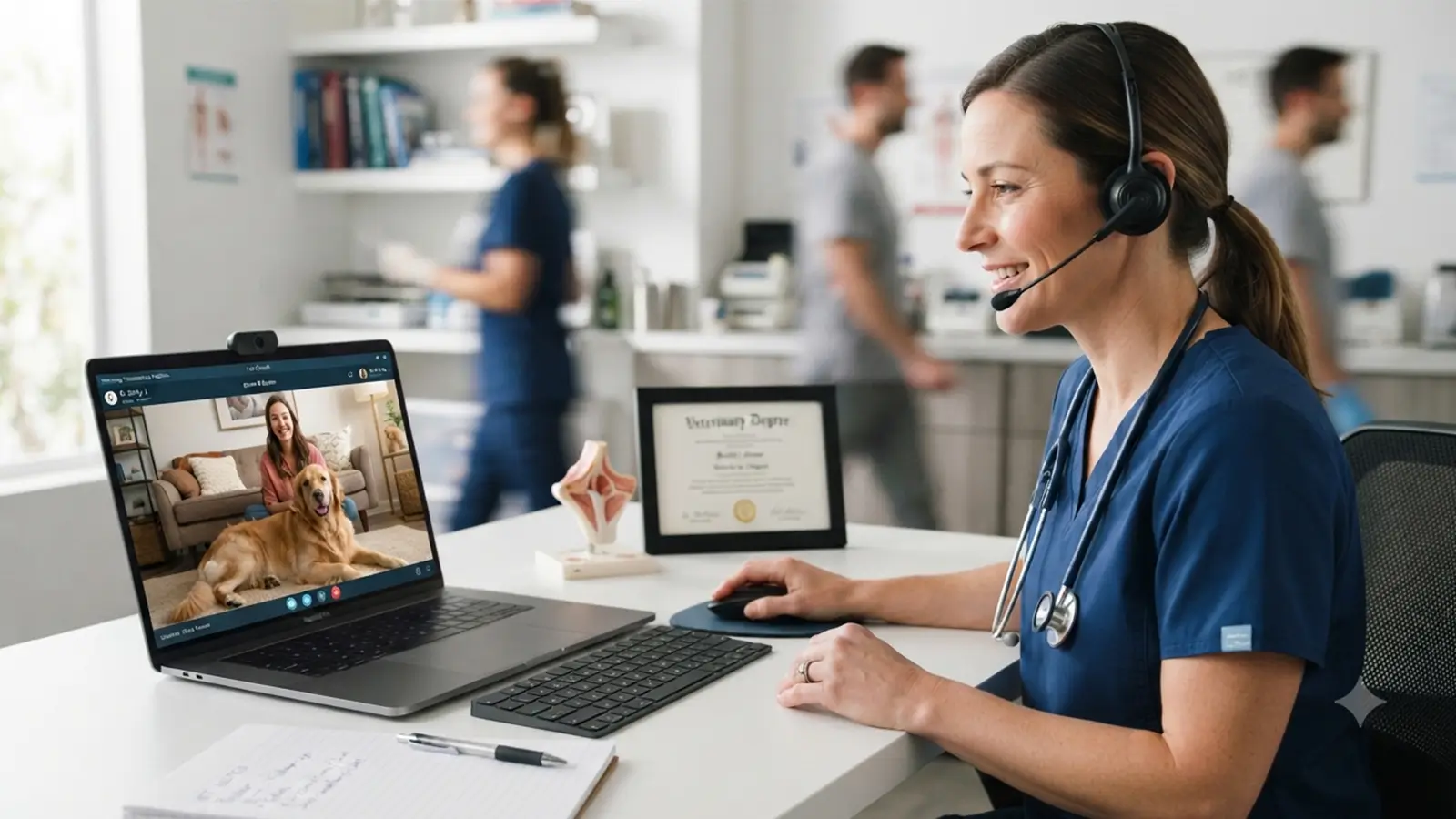
Veterinary telemedicine helps when your pet cannot tell you what hurts and guides you in deciding what to do next.
Quick Fact: Veterinary telemedicine uses phone, video, text, or secure apps to connect a veterinary team with a pet owner. It works best for follow ups, chronic condition monitoring, behavior and nutrition questions, and urgency triage. It does not replace a hands on exam, and it never belongs in a true emergency. Whether a vet can diagnose or prescribe remotely depends on the state where the pet lives.
It is 9 p.m., and your Labrador has vomited twice since dinner. He still wags his tail and laps up water, but your worry knows no limits. The clinic closed hours ago, and the emergency hospital sits 40 minutes away and charges a steep exam fee. Should you drive, or wait until morning?
Veterinary telemedicine exists for moments like this one. It gives you fast guidance, lets vets follow patients between visits, and spares animals needless trips. However, it also carries a risk: a pet whose problem needs hands and equipment can lose hours on a video call. This guide explains what telemedicine covers, what the law allows, where it works, where it fails, and how owners can tell the difference.
What Is Veterinary Telemedicine?
Three terms circulate in this field, and each carries different legal weight. The American Veterinary Medical Association (AVMA) treats telehealth as the broad category, with teleadvice and telemedicine as parts of it.
- Teleadvice is general guidance that stops short of diagnosing or treating a specific animal. A clinic nurse who explains how much a growing puppy of a given breed typically eats, or whether mouthing is normal at four months, is giving teleadvice. No veterinary relationship is required.
- Telehealth covers every form of remote communication between a veterinary practice and its clients, including appointment reminders, educational videos, and check in messages after a procedure.
- Telemedicine means a veterinarian assesses a specific animal remotely and may diagnose, treat, or prescribe. The law regulates this category most strictly, and that regulation revolves around a single concept: the VCPR.
The VCPR: Why Telemedicine Laws Vary by State
Nearly everything a veterinarian does for a sick animal rests on the veterinarian client patient relationship, or VCPR. The relationship exists
- When the vet takes responsibility for the animal’s medical decisions
- The owner agrees to follow the vet’s instructions
- And the vet knows the animal well enough to reach a diagnosis, either through a physical exam or through regular visits to the place where the animal lives.
Without it, a vet generally cannot diagnose, prescribe, or treat. However, the hard question is how that relationship begins, and two layers of law answer it differently.
Federal Rules
When a vet prescribes drugs in ways the FDA oversees, such as extra-label use, the FDA’s position is that a valid VCPR cannot be established solely through telemedicine. For those prescriptions, a video call with a brand new patient does not qualify.
State Rules
According to a mid-2026 industry summary, roughly 42 states plus the District of Columbia use language that matches the federal position, while about eight states let a vet establish the relationship remotely.
For example, California belongs to the permissive group, where video or audio technology can establish a VCPR under set conditions. A pet owner in a permissive state may legally receive a diagnosis from a vet the owner has never met in person. On the other hand, a pet owner in a stricter state may not.
However, three points matter in practice:
- A clinic that already examined the pet can almost always use video for follow ups, rechecks, and monitoring.
- General guidance with no diagnosis, known as teleadvice, does not require a VCPR.
- An online service that offers to diagnose or prescribe for a pet it has never examined should name the state law that allows it. A service that cannot answer that question deserves skepticism.
Outside the United States, rules vary by country and often by province or region. Owners in the United Kingdom, Canada, Australia, and elsewhere should check with their national or provincial veterinary regulator, such as the Royal College of Veterinary Surgeons in the UK, before relying on a remote service.
Where Veterinary Telemedicine Works Well
Veterinary telemedicine works best for non-emergency concerns that need professional guidance. It helps pet owners manage routine questions, follow-up care, and minor health issues from home.
Follow up Care After Procedures
After a spay, neuter, mass removal, or dental extraction, the vet mainly needs to see how the surgical site is healing. Redness that spreads, swelling, discharge, a gap in the incision, or a pet that keeps licking the area all tell the vet whether healing is on track. Owners help by photographing the site in daylight and placing a coin or ruler next to it for scale. A clear photo set sent each day often shows more than a rushed recheck in an exam room. Veterinary telemedicine does have a limit here: removing sutures or staples still requires an in person visit.
Chronic Condition Monitoring
Pets with long term conditions need frequent small adjustments, and many of those adjustments rely on information the owner collects at home. For example,
- An arthritic dog’s owner can film the dog rising from a rest and climbing stairs once a week, and the vet can compare the clips to judge whether pain control is working.
- Owners of diabetic pets can log appetite, water intake, and home glucose readings so the vet can review trends and recommend changes to the treatment plan.
- Pets with allergies benefit from dated skin photos that reveal seasonal patterns.
The caveat is that long term prescriptions still depend on an established VCPR, and many clinics require periodic in person exams and bloodwork before they refill medication.
Behavior and Training Concerns
A clinic exam room rarely shows the behavior that worries an owner. Separation anxiety illustrates the gap. An owner can set up a camera, leave, and record the first 30 minutes, and the footage shows whether the dog paces, drools, vocalizes, or destroys items, and when the distress peaks. The vet can then separate true anxiety from boredom or a medical cause. In addition, litter box problems work the same way: the vet wants to see the box type, its location, and how many boxes the household offers. One warning applies. A sudden change in a cat’s litter box habits can signal a urinary or kidney problem, so the vet may ask for an exam before treating the issue as behavioral.
Nutrition and Weight Management
Weight loss plans depend on steady tracking more than on hands on skill. The vet sets a calorie target, the owner weighs the pet every week or two, and short check ins every few weeks keep the plan on course. Owners can photograph the pet from above and from the side so the vet can score body condition. Pets with kidney disease, diabetes, or digestive disease need bloodwork before any diet change, which means the first step remains an in person visit.
Triage: the Most Useful Thing a Virtual Vet Does
Triage answers one question: how urgent is this? A trained professional asks about
- The species, age, and breed
- When symptoms began
- Whether the pet is eating and drinking
- What the gums look like
- And whether the pet could have swallowed something harmful
The symptom can land in different rows depending on the patient. A triage vet would likely recommend overnight monitoring and a morning appointment, and tell the owner to go to the hospital if
- The vomiting continues
- The pet becomes lethargic
- Blood appears
- Or he may have swallowed something he shouldn’t have
A good triage conversation weighs those differences, and a generic symptom checklist cannot.
Who answers matters. Some services staff licensed veterinarians, some use veterinary technicians, and some use call center employees with no medical license. Pet owners should ask about credentials before relying on the advice for a decision about urgency.
Rural and Mobility Limited Owners
Some owners live hours from the nearest clinic, and others cannot travel because of age, disability, or lack of transport. For them, remote access can decide whether a problem gets assessed at all. Large animal practice shows the same value: a vet can talk a rancher through an initial check of a sick cow and decide whether the long drive to the farm is worth making. For livestock, the federal VCPR standard can also be met through timely visits to the premises, which gives large animal vets a different route than companion animal vets have.
Where Veterinary Telemedicine Falls Short
A screen cannot palpate an abdomen, listen to a heart, draw blood, or take an X-ray. Animals also hide illness well, and a video shows only what the camera captures. A heart murmur, dental pain, or an enlarged organ can sit behind a pet that looks cheerful on screen. For that reason, most vets treat telemedicine as one tool alongside regular exams, and annual physicals, vaccines, dental care, and bloodwork still need an in person visit.
When to Skip Telemedicine
- Labored breathing or constant heavy panting
- Collapse, seizures, or sudden inability to stand
- Suspected poisoning
- A hard, swollen abdomen with unproductive retching
- Straining to urinate, especially in male cats
- Severe bleeding or serious trauma
What veterinary telemedicine can still do in these cases? A quick call can help the owner choose an emergency hospital, and a call ahead gives the clinic time to prepare. A poison control consultation can start during the drive. Telemedicine should speed up the trip and never replace it.
How to Get the Most from a Virtual Visit
The vet sees only what the owner shows, so preparation shapes the quality of the visit.
Start with records. Vaccination history, current medications with doses, and recent test results let the vet skip guesswork. Next, write the timeline: when symptoms began, how often they occur, and any change in eating, drinking, or bathroom habits. Vets treat a precise timeline as a clinical clue, and “a few days” tells them far less than “since Tuesday evening, three times a day.”
Video does the most work. If a dog limps only after a nap, or a cat coughs at night, a clip filmed earlier beats waiting for the problem to repeat during the call. For a pet with heart disease, vets often ask owners to count breaths per minute during sleep, so owners can ask what number to track. Photograph skin lesions, eye discharge, and stool in bright light, with a coin for scale, and ask a second person to hold the camera when the pet will not stay still.
Test the app, camera, and connection before the appointment starts. Before ending the call, the owner should confirm three things:
- Which signs mean the pet needs to come in sooner
- How long to wait before reaching out again
- Who to contact if the problem returns after hours
Choosing a Reputable Service
Not every online pet service meets the same standard, and a few checks separate the careful providers from the risky ones.
- Licensing. A vet generally needs a license in the state where the animal is located. Owners can verify a license through the state veterinary board’s public lookup tool, and a reputable service names its vets so that this check is possible.
- Clarity about diagnosis and prescribing. The service should explain what it can and cannot do in the owner’s state, and which visits require an existing VCPR. A service that promises a prescription before any real assessment is a red flag, and so is one that markets itself as a replacement for routine veterinary care.
- Clinic based options. Many local clinics now offer telemedicine to their own clients. This keeps the pet’s records in one place and puts the visit within an existing VCPR, which solves most of the legal questions above.
- An escalation plan. A good provider tells owners when to go in person and does not push remote care when it does not fit.
- Transparent pricing. Fees should appear before the visit starts. Owners can compare the virtual fee with the cost of an in person exam nearby and ask whether the fee includes a follow up message window. Some pet insurance plans reimburse virtual visit fees, so owners should check their policy before booking.
- Data privacy. Veterinary records fall outside HIPAA, which covers human health information. Owners should read how a platform stores videos, photos, and records, and who can access them.
Why a Blended Approach Works Best
Cost and travel rank among the most common reasons pet owners delay care, and veterinary telemedicine removes both barriers for a large share of everyday questions. That means problems get caught earlier, follow ups happen on schedule, and owners ask questions they would otherwise skip. At the same time, pets cannot describe their symptoms, and some conditions appear only under a stethoscope or on an X-ray.
The most reliable pattern combines both. Owners keep a relationship with a local vet who knows the pet, use telemedicine for follow ups, monitoring, behavior, nutrition, and triage, and go in person whenever doubt remains. The next time a pet seems off late at night, a short consult can turn worry into a calm decision, and the decision stays safe as long as the owner treats the consult as one part of the pet’s care.
Sources:
- Veterinary Telemedicine Market Research Report 2033
- Telehealth Including Telemedicine
- The Patchwork Quilt of State Veterinary Telehealth Laws
- Peer Reviewed Policy Analysis on VCPR and Telemedicine (PubMed Central)
- AVMA at Work: VCPR Requirements Fuel State Legislative Activity
By Mandar Shewale | Medically Reviewed by Jawad Ahmed, DVM | Last updated October 2026