
Healthy Dog Treats and Chews: What Happens When a Canine Nutritionist Puts Every Ingredient Under the Microscope?
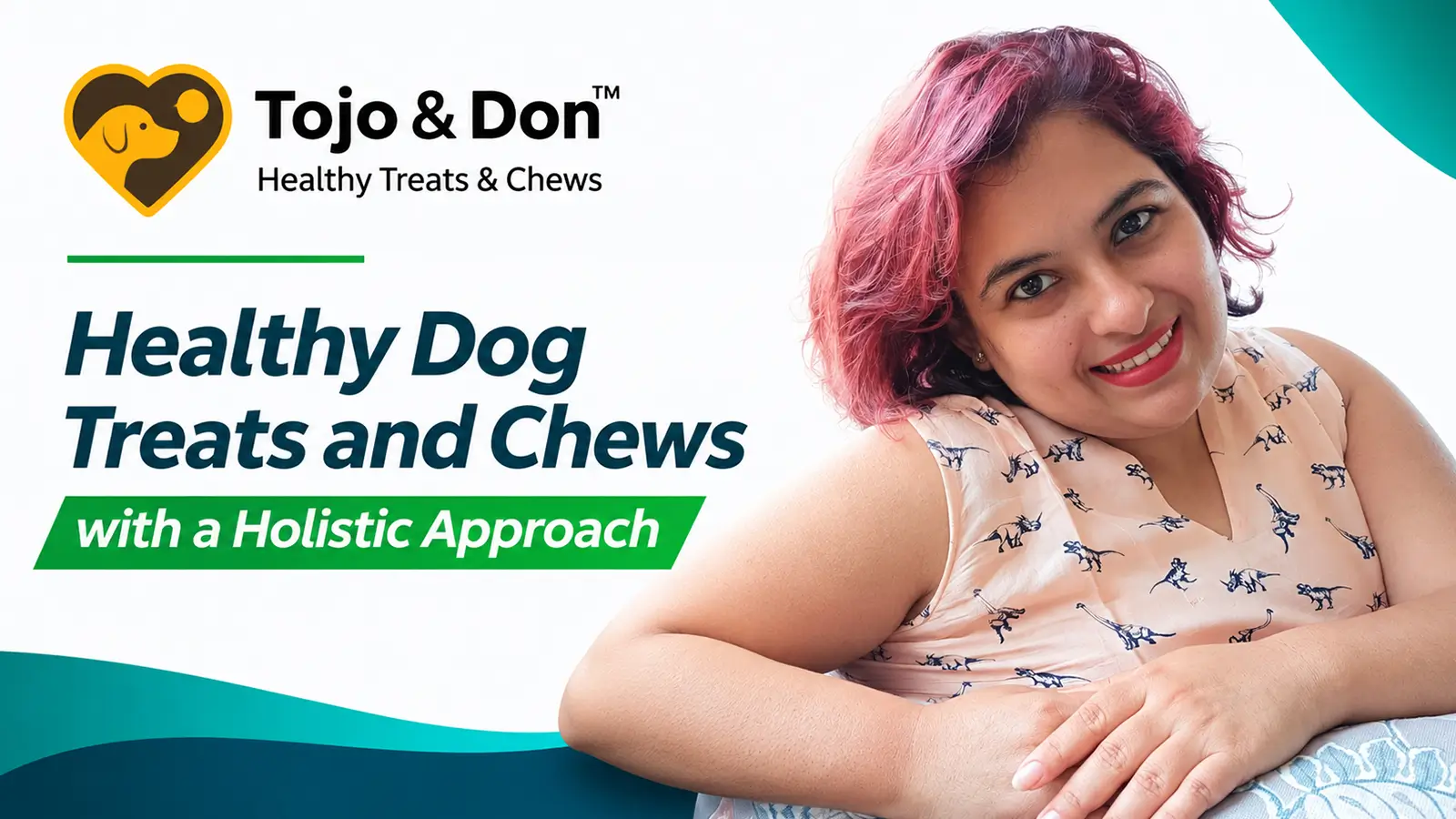
For Rati Saxena, dog treats and chews are about more than taste. They reflect a deeper commitment to canine nutrition, thoughtful ingredients, and individual dog needs. As the founder of Tojo & Don, Rati combines her business background with certifications in canine nutrition, animal naturopathy, and herbal care. Her journey began with personal experiences and a desire to make better choices available to Indian pet parents.
In this PETBIZS Founder Interview, she shares her approach to product development, natural ingredients, holistic dog care, and building a purpose-driven pet brand.
Thank you for joining PETBIZS, Rati. You built Tojo & Don around healthy dog treats and chews, backed by your own certifications as a canine nutritionist, animal naturopath, and herbalist. Before we dive in, can you introduce yourself and share what first drew you from an MBA in finance and marketing into holistic dog care?
Since childhood, I have been in love with dogs. Caring for them has always come naturally to me. For me, dogs have never really been “pets”. They have always been a part of the family.
I come from a Jain business family, so an MBA was a natural part of my education. It helped me understand business and gave me a strong foundation. But my journey as a canine nutritionist and animal naturopath came from somewhere completely different. It came from my love for dogs.
I had a pet who passed away at a very young age. At the time, we lived in a smaller city where access to good vets and proper veterinary facilities was limited. Losing him was very difficult for me. And it made me realize two things:
- How important it is to understand our pets’ health
- Why we shouldn’t depend only on treatment when something goes wrong.
That experience made me start learning more about keeping dogs healthy in a holistic way. I became deeply interested in nutrition, herbs, and natural approaches to supporting their health.
Then came my second dog.
He was diagnosed with Hip Dysplasia and, at one point, he was even paralyzed. By then, I had already started learning about canine nutrition and holistic care. I was not comfortable putting him through surgery at such a young age without exploring other options. So, I decided to learn everything I could about conservative management of Hip Dysplasia.
I worked on his nutrition, herbs, and overall holistic care, and I stayed closely involved in his recovery. Today, he runs. He plays. He lives a happy and pain-free life.
That journey changed something in me.
I realized that the knowledge I was gaining for my own dogs could also help other dogs and their parents. That is when I decided to take my learning more seriously and get professionally certified in Canine Nutrition, NatMed, and Animal Naturopathy.
Even after becoming certified, I have never stopped learning. I regularly update my knowledge because there is always something new to understand in canine health, nutrition, and wellness.
I never really planned to become a canine nutritionist or an animal naturopath. It happened naturally because of my love for dogs and my desire to give them a healthier life.
Today, that passion has become my purpose.
I want pet parents to understand that dog care means more than treating illness; it requires proactive, daily attention. It is also about nutrition, prevention, everyday care, and understanding what their body needs.
You hold certifications as a Certified Canine Nutritionist, Certified Animal Naturopath, Certified NatMed Herbalist, and a certificate in Canine Allergy from Dr Conor Brady. What made you decide you needed that many credentials before you felt ready to build a brand around your own dog’s food?
Honestly, I never really started collecting certifications to boost credentials before I could start a brand. It was more about my curiosity and my responsibility towards dogs.
Once I started learning about canine health and nutrition, I realized how much there was to understand. The more I learned, the more I realized that there was still so much more to learn. I wanted to understand dogs not just through nutrition, but also through herbs, natural care, allergies, and overall wellness. That is what led me to pursue different areas of study.
Even today, I am taking an advanced course at Southern Illinois University. I genuinely enjoy learning and updating myself, so for me, education is an ongoing process. I don’t think there is ever a point where you can say, “I know everything about dogs.”
When I started thinking about building Tojo & Don, my motivation was also very personal. I realized that many pet parents genuinely wanted to feed their dogs better. However, there were very few healthy options available on the shelves. Often, people had to choose from treats and chews that contained ingredients I wouldn’t want to give my dogs, including rawhide.
I felt there was a genuine gap and it turned into Tojo & Don.
With every treat, chew, and supplement, I asked myself one question: would I be happy giving this to my dogs?
That philosophy is also why we ventured into fresh food.
I wanted to create food that was species-appropriate, meat-based, and grain-free, without unnecessary fillers. Our fresh food uses human-grade meat, organs, vegetables, and soft bones, prepared in a way that suits dogs. We slow-cook it rather than subjecting it to very high temperatures or turning it into an ultra-processed food. My goal was to preserve natural ingredients and their nutrients, rather than rely on added synthetic nutrients.
So, for me, the certifications were never about putting more titles after my name. They came from wanting to learn more, improve practices, and take responsibility for what I put in a dog’s bowl.
Tojo & Don is a business, of course, but I have always been very clear about one thing. A dog’s health cannot be where we compromise.
That principle guides everything we create, and I’m proud to say we have never compromised on it.
What was missing from what was already available in India that convinced you the market needed a dedicated line of healthy dog treats and chews rather than another general pet food brand?
For me, it started with what I saw as a dog parent, not with a business idea.
I noticed a gap between what pet parents wanted to feed their dogs and what they could easily find. More people prioritized their dogs’ health and nutrition, but healthy treat and chew options remained limited.
A treat is something we give our dogs quite regularly, sometimes every single day. So, I always believed it should add nutritional value to their diet, not simply satisfy their taste preferences.
When I researched available products, I found many I wouldn’t feel comfortable giving my own dogs. Some products had unnecessary fillers, preservatives, and ingredients I didn’t feel belonged in a healthy dog’s diet. In addition, rawhide chews were another concern for me. I understood canine digestion well enough to question whether we should routinely give dogs these products.
At the same time, I could see that pet parents genuinely wanted better choices. They were willing to spend on their dogs, but they needed products they could understand and trust.
That made me feel there was room for a brand with a clear sense of purpose and identity.
I didn’t want to create another pet food brand with a very large catalog just to have more products. I wanted chose healthy dog treats and chews because I believed better health could make a difference.
That became the thinking behind Tojo & Don.
For us, a treat is not just a reward. A chew is not just something to keep a dog occupied. I wanted our products to have three purposes:
- Giving a dog something wholesome to enjoy
- Providing good quality nutrition
- Supporting a particular aspect of health
I also wanted pet parents to review our ingredients and understand exactly what they were feeding their dogs.
The market has evolved a lot, and today there are definitely more natural and premium options available. That is actually a good thing. It means pet parents are becoming more aware and the industry is moving in the right direction.
But my reason for starting Tojo & Don remains the same. I wanted to create products I could trust, instead of questioning whether shelf products were right for my dog. If the answer was not a clear yes, I didn’t want to make it. For me, that was the gap worth trying to fill.
Your background combines an MBA in finance and marketing with a genuinely scientific approach to canine health. How do those two very different skill sets show up together in how you actually run Tojo & Don day to day?
I actually feel that both sides of my education have found their place in Tojo & Don.
My MBA taught me how to look at a business from a practical point of view. You have to understand your numbers, costs, customers, marketing, and whether the business is sustainable. At the end of the day, a good product matters, but you also have to build a business that can survive and grow.
My learning in canine nutrition and animal health has given me a very different perspective. It makes me question the product itself. Why are we using a particular ingredient? Is it actually useful for the dog? Is there a better way of making it? Does the product have a purpose, or are we simply adding ingredients because they sound good on a label?
So, these two sides come together in almost every decision I make.
For example, sometimes a particular ingredient or process may make a product cheaper or easier to manufacture. But if I don’t feel it is right for the dog, I won’t use it just to improve our margins. That is where my understanding of canine nutrition comes in.
At the same time, my MBA side reminds me that we cannot run a business emotionally all the time. We have to look at costs, pricing, production, inventory, and what pet parents are actually looking for. We have to make sensible business decisions while still staying true to what we believe in.
Marketing is another area where the two come together. I don’t want to make health claims just because something sounds good and will sell better. I want our communication to be understandable to a pet parent but also responsible.
And I think that is probably one of the biggest differences in the way I look at Tojo & Don.
I view it from both perspectives, not just as a business owner or a nutritionist. I am constantly trying to look at it from both sides.
- The business side asks me, “Does this make sense for the company?”
- The canine health side asks me, “Does this make sense for the dog?”
For me, the second question can never be ignored just because the first one is easier.
I manage that balance daily at Tojo & Don, and believe it shapes the brand into what it is today.
You describe every product Tojo & Don sells as single-ingredient, 100% natural, and free from preservatives and additives. How do you decide what qualifies as truly healthy dog treats and chews versus what the industry is comfortable calling natural?
I’d like to clarify one thing here. I don’t say that all our products are single ingredient, because they are not. Some of our products have multiple ingredients, and each ingredient is there for a reason.
What I do believe very strongly is that our products should be natural, preservative-free, nutritious, and free from unnecessary nasties.
For me, the word “natural” should not just be a marketing word on a packet. I look at what goes into the product and ask myself whether I would be comfortable giving it to my own dogs.
When I develop or select an ingredient, I want to understand why it is there.
- Does it provide nutrition?
- Does it have a functional benefit?
- Is it something that makes sense for a dog?
Or is it added because it costs little, improves appearance, extends shelf life, or makes the ingredient list sound more impressive?
That distinction is very important to me.
I also don’t believe that having a long list of ingredients automatically makes something unhealthy. Sometimes, combining ingredients can create more effective products, especially when developing functional treats or supplements for pets. What matters is what those ingredients are, why they are being used, and whether they make sense together.
I am also quite particular about preservatives and unnecessary additives. I avoid adding ingredients solely for easier manufacturing or longer shelf life unless they genuinely benefit the dog’s health.
At Tojo & Don, I keep things as clean and honest. I want pet parents to review our ingredients and clearly understand what they feed their dogs.
And because of my background in canine nutrition, I naturally look at products differently. I don’t just look at whether something is labeled “natural”. I look beyond the front of the pack.
For me, a genuinely healthy treat uses purposeful ingredients, offers nutritional or functional value, and avoids unnecessary additives hidden behind clever marketing.
Ultimately, I keep coming back to the same question I ask myself with everything we make:
Would I happily give this to my own dogs?
If I am not comfortable with the answer, I don’t think it belongs in Tojo & Don.
That is probably the simplest way I can explain what “healthy” means to me.
You also completed a certificate course in Animal Psychology alongside your nutrition credentials. How does understanding a dog’s emotional and behavioral needs change the way you formulate a treat or a chew?
For me, understanding a dog is not just about understanding what is happening physically. I also want to understand what is happening emotionally and behaviourally.
That is one reason I studied Animal Psychology. Through my practice and own dogs, I’ve seen behavior connect to many factors, including nutrition.
I strongly believe that nutrition and behavior are connected. I have seen dogs change when their diet improves, and I have also seen certain behavioral issues become more noticeable when something is not right with their nutrition or overall health. Of course, every dog is different, and behavior can have many causes, so I would never say that nutrition is the answer to every behavioral problem. But I do believe it is an important piece of the picture and one that is often overlooked.
That understanding does influence the way I look at treats and chews.
I don’t want a treat to simply taste good and make a dog ask for another one. I look at what the treat is actually contributing to the dog’s diet and whether it makes sense for that particular purpose.
Chewing itself can also be a very natural and enjoyable activity for dogs. It can keep them occupied and provide mental stimulation, so I think about the dog’s experience as well as the ingredients going into the chew.
With our products, I always try to look at the whole dog rather than just one part. Their nutrition, their physical health, their emotional wellbeing, and even their individual preferences all matter.
And having lived with dogs for so many years, I have learned that they are all individuals. What works beautifully for one dog may not work for another. Some dogs are extremely food motivated, some are fussy, some need something to keep them occupied, and some simply want a treat because they enjoy that little moment with their parent.
So when I formulate or think about a product, I don’t just ask, “Will a dog eat this?”
I ask, “Is this good for the dog, does it serve a purpose, and does it fit naturally into the way dogs behave and live?”
For me, that is where nutrition and animal psychology come together.
Ultimately, I want our products to support the dog as a whole, not just fill their stomach.
Walk us through what actually happens between your kitchen and a customer’s home. What steps go into getting healthy dog treats and chews from raw ingredients to a vacuum-sealed, double-packed product on their doorstep?
It actually starts much before the product reaches the kitchen.
One thing I would like to clarify is that not all our products are made in the same facility. Depending on the product, some are made in our own setup, and some are made through trusted vendors whom I have carefully selected.
For me, the most important part is not whose facility it is. It is whether the same standards are being followed.
I am very particular about the ingredients we use. We carefully source and select raw materials for their quality, hygiene, and suitability for dogs. Some ingredients also require an uninterrupted cold chain, and we take that very seriously. The temperature has to be maintained right from sourcing and transportation through to processing and storage. You cannot afford to break that chain and then expect the product to be of the same quality.
Once the ingredients reach the facility, the preparation and processing happen in controlled batches. I prefer working with batches because it gives us better control over what goes into each product, rather than treating everything like mass production.
The batches then go through quality checks before they are packed.
Once we are satisfied with the quality, the products are vacuum-packed and then double-sealed. This is something I am quite particular about because I want the product to remain protected throughout its journey. The packaging also adds an extra layer of protection against tampering as the product moves from the facility to our storage and finally to the customer’s home.
After packing, the products are stored appropriately and then dispatched to the customer.
So, when a pet parent receives a Tojo & Don product, quite a lot has happened before that packet reaches their doorstep.
For me, it is not just about making a treat and putting it into a packet. It is about being careful at every stage, starting with the raw material, maintaining hygiene and the required temperature conditions, checking the batches, and making sure the final product is properly protected.
I also don’t want to pretend that everything is made in one beautiful kitchen just because that sounds better. We work with trusted people and facilities for different products, but the standards I expect remain the same.
At the end of the day, my name is on the brand and, more importantly, I know that there is a dog and a pet parent at the other end.
That is why I take every stage seriously.
The final product has to be something I would be comfortable opening and giving to my own dogs.
Your product range includes six varieties of natural chews alongside hard cheese chews made from premium raw materials, all part of your broader line of healthy dog treats and chews. How do you decide which ingredient becomes a chew versus a soft treat like your pumpkin or banana cookies?
The first thing I look at is what the dog will actually get from the product.
Our natural chews include Bully Sticks, Buff Tendons, Lamb Ears, Buff Ears, Chicken Feet, Duck Heads, and Turkey Heads. These are naturally harder and take longer for a dog to work through. So, apart from being something enjoyable for the dog, they also give them an opportunity to chew, which I feel is important for their dental and mental wellbeing.
Dogs naturally have a need to chew. Some dogs really enjoy spending time with a chew, and you can actually see how engaged and happy they become when they are working on one. It gives them something to do and can provide mental stimulation.
Treats serve a slightly different purpose.
A soft treat is often something a pet parent uses as a reward for good behaviour, during training, or simply as a little interaction with their dog. It is also a much better option for dogs who are not particularly interested in harder chews.
This is especially relevant with senior dogs. Some older dogs may still enjoy getting a treat but may not be comfortable with something very hard. So I don’t believe there should be one type of treat or chew that works for every dog.
Then there are our cookies, such as pumpkin- or banana-based treats. I see these as the kind of little treat a pet parent can keep handy and give their dog when they want to make them feel special. It could be after a walk, during training, when they have been a good boy or girl, or simply because you felt like giving them a little something.
Of course, even with healthy treats, portion matters. Just because something is natural and nutritious doesn’t mean we should give unlimited amounts. Treats should still form an appropriate part of the dog’s overall diet.
So, when deciding whether something should become a chew or a treat, I don’t just look at whether the ingredient can be made into one.
I think about the nature of the ingredient, how a dog naturally consumes it, how long it takes them to chew, what kind of experience it provides, and which dogs it would be suitable for.
For me, it’s about giving pet parents different choices for different situations.
Sometimes your dog needs something to chew on and stay occupied with. Sometimes you need a small reward during training. And sometimes you just want to open a jar, take out a little cookie, and make your dog’s day.
I think all of those moments are part of having a dog, and I wanted Tojo & Don to have healthy options for each of them.
Customers often mention dogs with allergies or picky eating habits who still take to your products immediately. How does your Canine Allergy certification shape the way you think about healthy dog treats and chews for dogs other brands cannot feed safely?
My study in Canine Allergy has definitely changed the way I look at treats and supplements.
One thing I’ve noticed is that a dog may not actually be a difficult eater. Sometimes an ingredient simply does not suit that particular dog. Chicken is a very common example. Many dogs don’t tolerate chicken well, but chicken is also present in so many dog treats and foods that the choices for those dogs can become quite limited.
That is one of the reasons we have tried to create variety at Tojo & Don.
If a dog does not tolerate chicken, I don’t want the pet parent to feel they have no option but to give up treats altogether. We have treats and chews made from different animal proteins and ingredients, so parents can choose what suits their individual dog.
We have followed the same thinking with our supplements. None of our supplements contain chicken. In fact, with our Healthy Shine skin and coat supplement, we went a step further and did not use fish either. Some dogs don’t do well with fish or even fish oil, so I wanted to create an option for those dogs too.
I think that is where my nutrition education has really influenced the brand.
The more I studied nutrition, the more I understood that you cannot always look at one problem in isolation. I strongly believe gut health is connected to so many aspects of a dog’s overall health, and I have seen this connection repeatedly in my practice. Even when we are looking at things such as sensitivities and allergies, I feel it is important to look at the dog’s overall gut health and nutrition rather than simply removing one ingredient and stopping there.
That thinking has influenced the way we develop our products.
I want our treats to be enjoyable, of course, but I also want to be conscious about what we are putting into a dog’s system. With our supplements in particular, supporting good gut health is an important part of how I think about overall wellness.
And I think having a variety is important because every dog is different.
There is no single treat that is going to suit every dog. One dog may love chicken, another may not tolerate it. One may be perfectly fine with fish, while another may not do well with it. Some dogs are extremely fussy, while others will eat almost anything you put in front of them.
So rather than trying to make one product that works for every dog, I would rather give pet parents genuine choices.
That is what I have tried to build with Tojo & Don.
If a particular ingredient doesn’t suit your dog, I don’t want that to mean that your dog has to miss out on the joy of having a healthy treat or chew. I want the parent to have another option they can explore, while still being mindful of their dog’s individual needs.
For me, that is what responsible pet nutrition is about. Understanding that every dog is different and making choices accordingly.
You have started expanding into supplements like Healthy Gut, Healthy Joint, and a skin and coat formula called Healthy Shine. What told you that treats alone were not enough to fully support the dogs you were trying to help?
As a canine nutritionist, animal naturopath, and herbalist, I have always looked at a dog as a whole. A treat can be healthy and nutritious, but it is still a treat. It cannot replace what a dog needs from its overall diet and health routine.
As I started working more closely with dogs and speaking to pet parents, I realized that many of the concerns they brought to me weren’t really only about treats. They were talking about digestion, loose stools, poor gut health, joint stiffness, mobility, skin issues, coat quality and general vitality.
That is when I felt treats alone weren’t enough.
My approach has always been to first understand what could be happening beneath the problem rather than simply treating the symptom. Nutrition plays a very important role in that, and so do herbs and natural ingredients when they are used thoughtfully.
Healthy Gut came from seeing how important digestion and gut health are to a dog’s overall wellbeing. I strongly believe that the gut is connected to so many things in the body. When digestion is not working well, it can affect much more than just the stool.
Healthy Joint came from a similar place. I have personally seen what joint problems can do to a dog, and my own experience with my dog’s Hip Dysplasia had a huge influence on how I think about mobility and long term joint care. I wanted to create something that could support dogs as part of a broader approach to their health and not wait until they were already struggling badly.
Healthy Shine came from seeing how often pet parents are looking for help with skin and coat health. Again, I don’t see skin and coat as completely separate from the rest of the body. Nutrition, digestion, gut health and the quality of what a dog is eating can all play a role in how they look and feel.
So the supplements were really a natural extension of what I was already doing.
I wasn’t sitting there thinking, “We need more products.”
I was thinking, “What are the problems dogs and their parents are actually struggling with, and is there a thoughtful way we can support them?”
That is how I look at every product we develop.
I also don’t believe that a supplement should be given just because it is available. It should have a reason for being there. The ingredients should have a purpose, and the product should fit into the dog’s overall diet and lifestyle.
For me, Tojo & Don has gradually moved beyond just making healthy treats because of my understanding of canine health.
Treats are one part of a dog’s life. Nutrition is much bigger than that.
As a canine nutritionist, animal naturopath, and herbalist, I feel responsible for keeping that bigger picture in mind and creating products that genuinely support dogs in their everyday lives.
Reviews mention picky, senior dogs who reject established brands but immediately respond to your products. What do you think healthy dog treats and chews from Tojo & Don are actually offering that a mass produced brand is not?
I think the biggest difference is the way I look at the product before it reaches the dog.
I have always been very conscious that dogs are not all the same. You can have one dog who will eat absolutely anything and another who will turn his nose up at almost everything. Then you have older dogs whose preferences and needs can change with age.
So I never wanted to make products with the mindset that one recipe should work for every dog.
With Tojo & Don, I look at the ingredients very closely. I want them to be natural, nutritious, preservative-free, and without unnecessary nasties. I also want the ingredients to actually have a reason for being there.
Taste is obviously important. If the dog doesn’t want to eat it, it doesn’t matter how good the ingredient list looks. But I don’t want to achieve taste by loading a product with things that I wouldn’t want to give my own dogs.
I think this is particularly important with picky and senior dogs. Sometimes they become more selective about what they eat, and sometimes they need something softer, easier to manage, or simply more appealing. That is why I like having different types of treats and chews in our range rather than expecting every dog to enjoy the same thing.
The natural chews are also very different from a small training treat. A dog gets to actually chew and work on them, which can be enjoyable and mentally engaging. Then we have softer treats and cookies that are easier to use as rewards or for dogs who don’t enjoy very hard chews.
I also think the care that goes into the ingredients and formulation matters. Because of my background, I tend to question things quite a lot. I don’t just ask whether something will sell. I ask why we are using an ingredient, what it contributes, and whether I am comfortable with it being part of a dog’s regular routine.
And I think that shows in the products.
When a pet parent tells me that their dog has rejected other treats but loves ours, honestly, that makes me very happy. But I don’t take it to mean that our products will magically work for every dog. Dogs have individual tastes and sensitivities, just like we do.
What I hope we are offering is choice.
Choice for the picky and senior dogs. Choice for the dog who doesn’t tolerate certain ingredients. And choice for the pet parent who wants to know exactly what they are giving their dog.
For me, Tojo & Don is not about trying to compete with a mass produced brand simply by saying we are healthier.
It is about being much more thoughtful about what goes into the product and remembering that there is a real dog at the other end of that packet.
That has always been the standard I set for myself.
If I wouldn’t feel comfortable giving it to my own dogs, I don’t want to put it under the Tojo & Don name.
You describe your philosophy as healing the root cause rather than masking the symptoms. How does that principle guide a decision as specific as which ingredient goes into a new chew?
For me, this philosophy is very personal. It is not something I learned only from books or courses. Much of it came from what I have seen in my own dogs and in the dogs I have worked with over the years.
When you truly love a dog, you start noticing the little things. A change in energy, digestion, the way they move, the way they behave, or simply that they are not quite themselves. And when I see something like that, my first instinct is not to ask, “How do I make this symptom disappear?” I ask, “Why is this happening?”
That is why I believe looking at the root cause is so important.
If we only focus on a symptom, we may make the problem look better for a while without understanding what is happening underneath. The symptom is often the body’s way of telling us that something needs attention. I would rather listen to that message than simply try to silence it.
Of course, I don’t believe every health problem has one simple root cause. Sometimes nutrition plays a role; sometimes digestion, lifestyle, environment, or other factors are involved; and sometimes a dog needs proper veterinary care. But I strongly believe that we should try to understand the whole picture instead of looking at just one visible problem.
This thinking also influences something as specific as choosing an ingredient for a chew.
I don’t choose an ingredient simply because it is popular, sounds impressive, or everyone else is using it. I want to know why it belongs there.
What does it give the dog? Does it provide nutritional value andserve a useful purpose? Does it make sense for the way dogs naturally eat and live and it also fit into their overall diet?
I also believe that food is one of the foundations of health. What a dog eats every day can matter over time, which is why I am very particular about what goes into our products.
I don’t want unnecessary ingredients simply because they make manufacturing easier, extend shelf life, or make a label look impressive. If something is going into a product, I want there to be a genuine reason for it.
And honestly, there is one test I come back to every single time.
I look at the finished product and imagine putting it in front of my own dogs.
Would I happily give this to them?
If I am not comfortable with the answer, I don’t want it under the Tojo & Don name.
For me, healing is not about quickly covering up what the body is trying to tell us. It is about understanding the dog better, supporting the body thoughtfully and giving it the right foundation wherever nutrition can play a role.
That is the philosophy I carry into every product we make.
Because at the end of every formulation, there isn’t just a product or a customer.
There is a dog.
And for me, that dog always comes first.
Beyond Tojo & Don, you also run consultations through ratisaxena.in for pets facing skin allergies, hip dysplasia, joint issues, and gut health. How does that one on one consulting work feed back into the healthy dog treats and chews you eventually bring to market?
One of the most valuable things about doing one on one consultations is that no two dogs are really the same.
A pet parent may come to me because their dog has itchy skin, recurring digestive problems, Cancer, joint stiffness, mobility issues, or something else that has been worrying them for a long time. But when we talk, I try to understand much more than just the problem they came in with.
I want to know what the dog is eating, what treats they are getting, how their digestion is, their lifestyle, their history, what has already been tried, and how their body has been responding. Sometimes the little details tell you much more than the obvious symptom.
That is where the consulting work has taught me a lot.
When you speak to pet parents every day, you start seeing patterns. You realize that many parents genuinely want to do the right thing for their dogs, but they often don’t know what to choose. They may be standing in front of an entire shelf of treats and supplements and have no idea what is actually appropriate for their dog.
Those conversations have influenced Tojo & Don enormously.
For example, when I repeatedly heard parents talking about digestive issues and poor stool quality, it made me think more deeply about how we could support gut health through nutrition. That thinking eventually contributed to products like Healthy Gut and Prebiotic & Probiotic blend.
When I spoke to parents about older dogs becoming less active or dogs struggling with mobility, it reinforced for me how important joint support is as part of a dog’s overall care. Healthy Joint grew out of that broader understanding, along with my own experience with my dog.
The same applies to skin and coat concerns. I don’t look at the skin completely separately from the rest of the dog. I think about nutrition, digestion, gut health, and what the dog is eating overall. That way of thinking influenced Healthy Shine as well.
But I want to be very clear about something. I don’t take what I learn from consultations and simply turn every common problem into a product.
For me, it has to make sense.
If I see a genuine need and feel there is a thoughtful way to support dogs through nutrition and carefully selected ingredients, then I explore it. I look at the ingredients, the purpose, how they work together, and whether I would personally be comfortable giving the finished product to my own dogs.
The consultations also keep me grounded.
A product can look perfect on paper, but real dogs are the ones who ultimately tell you whether it is useful, appealing, and practical. Their responses, and the experiences shared by their parents, help me keep learning and questioning what we do.
So I would say there is a continuous connection between the two.
My consultations help me understand real dogs better, and that understanding influences what I choose to develop for Tojo & Don.
And then the products go back into the real world, where dogs and their parents give me another layer of learning.
For me, it is not about creating products first and then finding a reason for them.
It is the other way around.
I listen to the dogs, I listen to their parents, I learn, I research, and then I ask myself whether there is something genuinely useful I can create.
That is how Tojo & Don continues to evolve.
Your approach is described as holistic, covering body, mind, and spirit together rather than treating physical health in isolation. What does that actually look like when you are advising a pet parent on a specific dog’s diet?
For me, holistic care is really about understanding the whole dog, not just the problem that has brought them to me.
When a pet parent tells me, for example, that their dog has a skin issue, digestive problem, joint discomfort, or a change in behavior, I don’t immediately want to label it or simply mask the symptom. I want to understand what is happening underneath.
I look at the diet, of course, because what a dog eats can have a huge impact on how they feel. But I also ask about their history, routine, sleep, exercise, digestion, environment, and physical comfort. Sometimes physical therapy, movement, or other supportive care can be just as important as changing the food.
I also spend a lot of time looking at behavior. Has the dog suddenly become anxious? Are they licking themselves constantly? Have they stopped wanting to play? Are they restless, withdrawn, or unusually aggressive? These behaviors can sometimes be the dog’s way of telling us something isn’t right.
Then I try to understand the triggers. Was there a stressful event? Has something changed at home? Has the dog experienced pain, fear, or trauma? Even small changes in their surroundings or routine can affect a sensitive dog.
There’s another part that people sometimes overlook. I look at the relationship between the dog and their human. Dogs pick up so much from us. Our routines, emotions, stress levels, and even the way we respond to their behavior can influence them. So sometimes understanding the pet parent is also important in understanding the dog.
That is what holistic care means to me. It is putting all these pieces together rather than looking at one symptom in isolation.
Every dog has a different personality, history, and set of circumstances. So I do not believe in a one size fits all approach. I first try to understand what that particular dog may be going through, then work to support them from the inside out.
For me, the bowl is important, but it’s never the whole story.
You offer free shipping and pan India delivery on healthy dog treats and chews, reaching pet parents well beyond a single city. What have you had to build operationally to make that kind of reach possible for a natural, small batch product?
Honestly, when I started this journey, I didn’t realize how much goes into getting a small-batch product from our hands to a pet parent sitting in a completely different part of India.
As an animal naturopath and canine nutritionist, my first priority has always been the quality of what we make. I am very particular about the ingredients, how the treats and chews are made, stored, and packed. But as a founder, I’ve learned that making a good product is only one part of the job. You also have to figure out how to get it safely and reliably to the person who has ordered it.
Over time, we have built relationships with a few courier partners who help us cover most of the country. But India is huge, and there are always some locations where private couriers can’t deliver. In those situations, we often turn to Speed Post. I actually really value having that option because their network is so extensive, and we have been able to reach some fairly remote areas through them.
With shipping, we also have to be practical as a small business. We offer free shipping once the order crosses a certain value because otherwise it becomes difficult for a small brand like ours to absorb the entire shipping cost. At the same time, I have consciously tried to keep our margins low. I genuinely believe pet parents should get value for their money, especially when they are already choosing a premium quality product for their dog.
For me, premium should not mean paying a huge premium just for the label. I want them to know that they are paying for good ingredients, careful preparation, small-batch production, and something I would be comfortable giving to a dog myself.
There is also a lot of planning behind the scenes. We have to keep an eye on production, stock levels, packaging, dispatches, and courier timelines. Because we work in small batches, we cannot simply manufacture enormous quantities and let them sit for months. We have to plan carefully so that we can maintain the freshness and quality that we promise.
And then there is the human side of it. Sometimes a parcel gets delayed, a courier cannot find a location, or something unexpected happens during delivery. As a founder, I have learned that you cannot just say, “It has been shipped; now it is the courier’s problem.” The pet parent has trusted us with their order, so I feel responsible for helping sort things out.
I think that is one of the biggest differences between building a small, personal brand and simply selling a product. I am involved in so many parts of the journey, from thinking about what is right for the dog nutritionally to making sure that the same product reaches a pet parent in a small town or a remote corner of India.
So, pan-India delivery has really been a combination of good logistics, reliable courier partners, careful planning, and, honestly, a lot of learning along the way. We are still a small business, but I want our customers to feel that they can access our products no matter where they live.
Sunday Mid Day featured your work in a story on Tojo & Don. How did that kind of press exposure change the kinds of pet parents who started reaching out to you, whether for products or consultations?
The Sunday Mid Day feature actually came about in a much unexpected way. They contacted me because one of my clients had spoken to them about her experience with my consultations.
Her dog had been diagnosed with severe hip dysplasia, and she had come to me looking for a more holistic way to support him. She shared with them how well her dog was doing with the changes we had made and the overall approach we were following. That is what brought my work to their attention.
When they contacted me, they wanted to understand my journey, why I started working with dogs this way, and what I was trying to do differently. The story ended up being about much more than just my work. It was about my journey, my belief in looking at the dog as a whole, and how nutrition, lifestyle, physical support, and emotional wellbeing can all play a role.
After the story was published, I was honestly quite surprised by the response.
I started receiving messages from pet parents I had never met before. Many were reaching out because their dogs were dealing with health concerns and they simply didn’t know where to turn. Some had dogs with joint and mobility issues, some were struggling with digestive or skin problems, and others were dealing with behavioral or anxiety-related concerns.
What touched me was that many of these parents were not just looking for a product. They were looking for someone who would actually listen to their dog’s full story.
They would tell me about their dog’s history, what they had already tried, what their dog was eating, changes they had noticed, and sometimes even things they had never thought were connected to the health problem. Those conversations reminded me why I started doing consultations in the first place.
The exposure certainly helped more people discover Tojo & Don, but for me, the bigger impact was that it opened the door to many more conversations with pet parents who genuinely needed guidance.
It also gave people a glimpse into why I approach dogs the way I do. I do not believe in looking at a diagnosis or a symptom in isolation. I want to understand the individual dog, their history, their diet, their lifestyle, and what may be happening around them.
So yes, the feature gave us visibility, but what I remember most is the number of people who reached out afterward saying, in their own way, “I need help understanding what is happening with my dog.”
That was much more meaningful to me than the publicity itself.
For a pet parent who has only ever fed commercial kibble and mass produced treats, what would you want them to understand about the difference healthy dog treats and chews rooted in real nutrition science can make?
I have always believed that food should be as close to its natural form as possible. Personally, I don’t consider ultra-processed kibble the healthiest way to feed a dog, and whenever possible I prefer whole foods, natural ingredients, and minimal processing. I also prefer gentle, low heat preparation where it helps retain more of the natural nutritional value of the ingredients.
That said, I also understand the reality of being a pet parent. Not everyone has the time, resources, or knowledge to prepare fresh food every day. Many parents depend on kibble because it is convenient and practical, and I would never make them feel guilty about that. My role is to educate them, explain the choices available, and then let them decide what works best for their dog and their family.
Sometimes I also show parents how they can get more naturally available nutrients through whole foods instead of automatically relying on synthetic vitamin supplements. It can be as simple as understanding which natural foods provide particular nutrients and how they can be included appropriately in a dog’s overall diet.
And this same thinking is what I bring into treats.
I feel treats are often overlooked because they are considered a small part of the diet. But if you are giving your dog treats every day, sometimes several times a day, those ingredients become part of their regular nutritional intake. So I ask pet parents to look beyond whether their dog loves the taste.
What is actually in the treat? How has it been processed? Are there unnecessary fillers, artificial colors, or ingredients that do not really need to be there? Is the treat made from ingredients that have some nutritional value, or is it simply something designed to taste good?
For me, a healthy treat should be made with a purpose. It should fit into the dog’s overall diet and, wherever possible, provide something worthwhile rather than simply adding empty calories.
This is also why I believe there cannot be one perfect treat for every dog. A young active dog, a senior dog, a dog with a sensitive stomach, and a dog with particular food sensitivities may all need very different things. The treat should make sense for that individual dog.
I also do not believe pet parents need to change everything overnight. Even if their dog is eating kibble, they can start by making better choices about the treats they give or by adding fresh food to the routine. Read the ingredients. Understand what you are feeding. Choose simpler, more recognizable ingredients where possible, and be mindful of how many treats you give.
That is really the philosophy behind what I want to create at Tojo & Don. I want treats and chews to be something a pet parent can give with confidence. Not just because the dog gets excited when they see the packet, but because the person giving it knows there is thought behind what is going into their dog’s bowl.
For me, the ultimate goal is not to tell parents what they must feed or make them feel guilty. It is to give them better information and better choices. Once they understand the difference, they can make decisions that are right for their own dog.
You offer WhatsApp support for pet parents whose dogs are dealing with skin allergies, hip dysplasia, joint issues, or gut health struggles. Why did you decide that level of direct, personal access needed to be part of a product business?
I would say WhatsApp support isn’t directly part of the product business. It comes much more from my work with dogs and from the way I approach consultations.
When you ask a pet parent to change how they feed or care for their dog, you cannot just give them a list of things to do and expect everything to happen perfectly. A certain amount of handholding is needed.
Most pet parents genuinely want to do the best for their dogs, but they can be confused too. They may have been feeding the same food for years; they may have heard completely different advice from different people; or they may be worried about making a change because their dog has a sensitive stomach or an existing health concern.
That is where I feel direct communication becomes important.
During a consultation, I may suggest changes in diet, feeding routine, supplements, movement, or other supportive measures depending on what the dog needs. But then the real work starts at home. The parent has to understand how to introduce the changes, what to watch for, and what is normal during the transition.
Sometimes they simply need to ask me, “Is this okay?” or “My dog did this today, should I be concerned?” Those small conversations can make a big difference because they give pet parents the confidence to keep going rather than giving up halfway.
When dogs are dealing with things like skin allergies, joint problems, hip dysplasia, or gut issues, I also want parents to watch their dogs closely. Changes in appetite, stool, energy, movement, itching, or behavior can all give us useful information. Having that communication makes it easier to understand how the dog is responding.
I also think people need to feel heard. When someone has been struggling with their dog’s health for months or sometimes years, they often have a lot of questions and a lot of anxiety. They want someone to listen to the whole story, not just look at one symptom.
So WhatsApp support is really an extension of that relationship. It is not about being available every minute or turning a product purchase into a consultation. It is about making sure that when I am working with a pet parent, they do not feel completely alone while trying to implement the changes.
For me, education is only useful when a person can actually put it into practice.
I can tell a parent what I think may help their dog, but if they are confused about how to do it, the advice has very little value. Sometimes a little guidance, reassurance, and handholding is what helps them make the change correctly and stay consistent.
And ultimately, that is what I care about. I want the pet parent to become more confident in understanding their own dog, rather than becoming dependent on me for every little decision.
Ingredients like fish cartilage, buff ears, and dehydrated chicken necks are less common in mainstream pet treat aisles. What made you confident these belonged in your line of healthy dog treats and chews rather than staying niche products only serious raw feeders would seek out?
I think my confidence in using these ingredients comes from my education and the amount of time I have spent understanding canine nutrition, natural feeding, and how dogs actually use different foods in their bodies.
When you understand a dog’s nutritional needs, you start looking at ingredients very differently. Something that may look unusual to a person can actually be a very natural and useful part of a dog’s diet.
Take ingredients like fish cartilage, buff ears, or dehydrated chicken necks. I didn’t pick these ingredients simply because they sounded different or because I wanted to create something niche. Instead, I looked at what they naturally provide and how they can fit into a dog’s overall diet.
I have always been interested in going back to what is natural for dogs. Dogs evolved to eat whole animal foods, and there is value in looking at different parts rather than giving them highly processed products made from a long list of ingredients.
My work and education have taught me to look at the nutritional purpose behind an ingredient. Fish cartilage, for example, naturally contains structural components that can be relevant when we think about connective tissue and joint support. Chews such as buff ears can also provide natural chewing activity, which many dogs instinctively enjoy. Dehydrated chicken necks provide a whole food chew that includes naturally occurring nutrients and minerals.
But I also understand that these products can look unfamiliar to a pet parent who has only ever seen colorful biscuits and highly processed treats on a supermarket shelf.
That is why I feel education is so important.
I do not expect someone to look at a dehydrated chicken neck and immediately understand why I would choose to give it to my dog. I want to explain what it is, why it may be useful, and how to offer it appropriately. Once people understand the ingredient rather than simply looking at its appearance, it becomes much less intimidating.
At the same time, I am very conscious that natural does not automatically mean suitable for every dog. The individual dog matters. Their age, size, chewing ability, dental health, digestive health, and overall diet all need to be considered.
So I would never say that every dog needs every chew. My approach is always to understand the dog first and then choose what makes sense.
When we started developing these products, I wanted to make naturally inspired options more accessible to ordinary pet parents, not just people who already follow raw feeding or know a great deal about canine nutrition.
I think there is a growing group of pet parents who want to move toward better, more natural choices but don’t necessarily want to become experts in raw feeding themselves. They just want to know that the treat they are giving their dog has a reason behind it.
That is where I see the role of Tojo & Don. We can take ingredients that have traditionally remained quite niche and present them in a way that is easier for the everyday pet parent to understand and use responsibly.
For me, it comes back to one simple question whenever I consider an ingredient: why am I putting this into a dog’s diet?
If I can answer that from a nutritional and practical point of view, and I believe it can genuinely add value, then I do not feel it needs to remain a niche product simply because it looks unfamiliar to us.
You are a Certified NatMed Herbalist alongside your nutrition credentials, and that herbal knowledge runs through your line of healthy dog treats and chews as much as your supplements. How does it specifically show up in a product like your Herbal Multivitamin or your Natural Dewormer?
My herbal knowledge has probably influenced Tojo & Don more than people realize. For me, herbs are not something I add to a product simply because they sound natural. I look at what each ingredient brings to the formulation and how it can support the dog as part of a bigger nutritional picture.
The Herbal Multivitamin is a good example of that. It brings together ingredients such as kelp, alfalfa and milk thistle, along with digestive enzymes and Vitamin B12. Kelp and alfalfa provide naturally occurring minerals and plant nutrients, while milk thistle is traditionally valued for liver support. The digestive enzymes are there with digestion and nutrient utilization in mind, and B12 has an important role in energy metabolism and normal nervous system function.
So when I formulated it, my thinking was not simply, “Let us make a multivitamin.” I wanted to create something where natural plant based ingredients and nutritional support could work together. That is very much how I think as someone trained in nutrition as well as herbal practice.
The same philosophy is behind our Natural Dewormer. I wanted to explore a gentler, plant based approach rather than making everything about harsh intervention. The product is part of our natural wellness range and is intended to support dogs as part of a broader approach to their health.
But I also want to be responsible about this. A natural dewormer should not be presented as a replacement for veterinary diagnosis or appropriate treatment when a dog has a confirmed or significant parasitic infection. If a dog has worms, the type and severity matter, and sometimes proper veterinary treatment is absolutely necessary.
That balance is important to me. My herbal education has taught me to respect the potential of plants, but my work with dogs has also taught me that natural does not automatically mean suitable in every situation.
Ultimately, this is what I try to bring into Tojo & Don. I look at traditional natural ingredients through the lens of what I have learnt about canine nutrition and herbal practice, and then ask myself whether they have a meaningful place in a dog’s overall wellness routine.
For me, it is always about thoughtful formulation rather than simply putting herbs into a packet and calling something natural.
As more Indian pet parents move toward natural feeding, how do you see healthy dog treats and chews evolving over the next several years, both for Tojo & Don specifically and for the wider Indian pet industry?
I think the Indian pet industry is going to change quite significantly over the next few years. Pet parents are becoming much more aware of what they are putting into their dogs’ bowls, and I feel that awareness will move beyond the main meal and into treats, chews and supplements as well.
For me, a treat should not just be something that makes a dog happy for a few minutes. If a pet parent is giving treats every day, those treats are also contributing to the dog’s overall diet. So I see a much stronger demand for simple ingredients, better quality proteins, natural sources of nutrients and products with a genuine purpose behind them.
I also think pet parents will become much more comfortable with ingredients that may look unusual to us but are quite natural for dogs. Things like dehydrated animal parts, cartilage, organ meats and other whole food ingredients can have a place when they are selected carefully and given appropriately. There will be more curiosity about where an ingredient comes from, how it has been processed and why it is being used.
At Tojo & Don, this is very much the direction I want to continue in. I do not want to create products simply because a particular ingredient or trend is popular. I want every product to have a reason behind it. My background in canine nutrition and herbal wellness naturally leads me to consider an ingredient’s nutritional value, how it fits into a dog’s diet, and whether there is a meaningful purpose for including it.
I also see a future where treats become more personalized. A puppy will not necessarily need the same kind of treat as a senior dog. A very active dog, a dog with a sensitive digestive system, and a dog with particular food sensitivities may all need different choices. I think pet parents will increasingly look for treats according to their dog’s age, lifestyle, and individual needs rather than simply buying whatever has the most attractive packaging.
For the wider Indian pet industry, I think education will be just as important as new products. There are still many parents who want to feed better but do not know where to begin. We need to make natural feeding easier to understand rather than making people feel that they have to completely change their lifestyle overnight.
I would also like to see more transparency in the industry. Pet parents should be able to understand the ingredients, the processing methods, and the actual purpose of a product without having to be experts themselves.
For Tojo & Don, my vision is quite simple. I want us to keep making products that I would feel comfortable giving to my own dogs, while constantly learning and improving. Besides, I do not want us to become just another pet treat brand. In fact, I want us to build a relationship with pet parents where they know there is thought, knowledge, and genuine care behind what we make.
I believe the future of the Indian pet industry will be much more about informed choices than simply buying more products. And honestly, that is the kind of change I would be very happy to be part of.
Running both a product brand and a personal consulting practice under your own name must take very different kinds of energy. How do you divide your time between formulating products and actually working one on one with pet parents?
For me, the two sides of my work are actually very closely connected. I do not really see Tojo & Don and my holistic consulting practice as two completely separate things. Both come from the same place: my belief that dogs deserve better nutrition and more thoughtful, natural care.
When I am working one on one with pet parents, I am constantly learning. Every dog is different, and every case teaches me something about nutrition, behavior, lifestyle, and the way the body responds. That experience naturally shapes how I think about products and formulations for Tojo & Don.
At the same time, product formulation requires a very different kind of focus. I spend time understanding ingredients, their purpose, sourcing, combinations, and how they can genuinely support a dog rather than simply adding another product to the market. I am quite particular about what goes into something that carries the Tojo & Don name because I would never formulate or recommend anything I wouldn’t be comfortable giving to my own dogs.
So I do not follow a rigid formula where I divide my day into an exact number of hours for each. My consulting work needs my full attention because a real dog and a real family are depending on that guidance. Product development, on the other hand, often happens in the quieter parts of my day, when I can think, research, and work through formulations without distractions.
There are definitely days when it feels like I am wearing too many hats, but honestly, I love that my work allows me to do both. Consulting keeps me connected to the real problems pet parents are facing, while Tojo & Don gives me the opportunity to create solutions that can reach many more dogs.
At the heart of both is the same purpose for me: helping dogs live healthier, happier lives through better nutrition, natural support, and a more holistic approach to their wellbeing.
If a new pet parent came to you today confused by every conflicting claim about dog nutrition online, what would you tell them to look for first when choosing healthy dog treats and chews for their own dog?
I would first tell them to stop looking at the marketing and start looking at the ingredient list.
There is so much noise around pet nutrition today. One person says a particular ingredient is dangerous, another says it is a superfood, and every packet seems to promise something different. I think pet parents can easily get overwhelmed if they try to follow every opinion they see online.
When I choose a treat or chew, I look for simplicity first. I prefer treats where I can actually recognize and understand the ingredients. If it is a chicken treat, I want to know that it is genuinely chicken and not a long list of unnecessary fillers, colors, flavors, or preservatives. Ideally, I like single-ingredient treats because there is very little confusion about what the dog is eating.
I also look at how the treat has been processed and where the raw material comes from. Natural does not automatically mean healthy, and an attractive label does not automatically mean good nutrition. The quality of the raw material and the way it has been prepared matter just as much.
For chews, I would also consider the individual dog. A chew that is perfectly suitable for one dog may not be appropriate for another depending on their age, size, chewing style, dental health, and digestive sensitivity. I would never choose a chew simply because it is trending or because someone else’s dog loves it.
And most importantly, treats are treats. They should complement a good diet, not replace one. I always encourage pet parents to look at the whole picture rather than expecting one biscuit, chew, or supplement to solve everything.
This is also the philosophy behind Tojo & Don. I wanted to create products that I could understand, trust, and confidently give to my own dogs. For me, healthy treats mean clean ingredients, honest labeling, appropriate processing, and, above all, choosing something that genuinely makes sense for the individual dog.
My simplest advice to a new pet parent is this: read the ingredients, understand what you are feeding, and don’t let clever marketing make the decision for you.
What is the biggest misconception Indian pet parents still hold about what actually belongs in a dog’s diet, based on the consultations and questions you get on a regular basis?
The biggest misconception I see is that dogs need a complicated diet, and that everything they need has to come from a packet, a supplement, or commercially manufactured food.
There is so much confusion among pet parents about what a dog can and cannot eat. I regularly hear questions about whether organ meats, certain vegetables, bones, herbs, or natural fats are safe. Somewhere along the way, we have made feeding our dogs seem much more complicated than it needs to be.
One thing I particularly try to explain to pet parents feeding fresh food is that not every single bowl has to be perfectly balanced. When you are feeding fresh, whole foods, balance comes through variety and rotation. You may have a meal that is higher in one nutrient and another meal that brings in something different. You rotate proteins, organs, eggs, fish, vegetables, healthy fats, and other functional foods, and over time, the diet comes together as a whole.
We sometimes get so caught up in trying to make every bowl perfect that we forget how nature actually works. I am much more interested in the nutritional picture over days and weeks than in expecting every individual meal to tick every nutritional box.
As an animal naturopath and canine nutritionist, I believe we need to look at dogs as animals first. Their diet should respect their biology and their individual needs. Fresh, appropriate whole foods can play an important role when selected thoughtfully and balanced over time.
Another misconception I see is that one diet or one ingredient will work for every dog. It simply does not. A growing puppy, a senior dog, an active dog, and a dog with a particular health concern may all need very different nutritional approaches.
I also feel pet parents sometimes become frightened of natural foods because they hear one isolated warning online. Nutrition should not be based on fear. It should be based on understanding the whole diet, the quality of ingredients, the dog’s individual requirements, and how that dog is actually responding.
My approach is quite simple: balance does not have to mean complicated. I would much rather teach a pet parent how to understand their dog’s food and make sensible choices than give them a long list of rules they are afraid to break.
That philosophy is also what influences my work with Tojo & Don. Whether I am formulating a treat or sitting across from a pet parent during a holistic consultation, I always come back to the same question: Does this genuinely serve the dog, or are we simply feeding it because someone told us we should?
For me, good nutrition starts with going back to basics: understanding the dog in front of you, embracing variety and rotation, and letting the overall diet balance naturally over time.
As we wrap up, what do you want pet parents across India to understand about the future of healthy dog treats and chews, and the kind of care you believe every dog deserves?
I want pet parents across India to start looking beyond attractive packaging and clever marketing and ask a much simpler question: Is this actually good for my dog?
I truly believe India is at an exciting turning point in pet care. Pet parents are becoming more informed; they are asking better questions, and they are no longer willing to accept that a brightly packaged product automatically means it is healthy. I want to see that awareness grow even further, especially around treats, chews, supplements, and everyday nutrition.
For me, the future of healthy treats and chews in India is about transparency, quality ingredients, and going back to basics. We have access to some incredible natural ingredients and traditional knowledge in this country, and I would love to see more thoughtful, responsibly made pet products emerging from India rather than simply replicating what is popular globally.
That is something very close to my heart because it is exactly why I started Tojo & Don. I wanted to create treats, chews, and supplements that I could understand, trust, and give to my own dogs without constantly questioning what was actually inside them. I want Tojo & Don to contribute to a larger shift in India, where pet parents feel empowered to understand what they are feeding rather than relying on marketing or trends.
But I also believe the future of pet care is bigger than products. We need to change the way we think about the dog as a whole. Nutrition, movement, mental stimulation, emotional wellbeing, sleep, environment, and preventive care are all connected. As an animal naturopath and canine nutritionist, that is how I approach my holistic consultations as well. I do not believe in looking at one symptom in isolation when there is an entire animal in front of us.
And perhaps most importantly, I want Indian pet parents to understand that no single perfect diet, treat, or routine works for every dog. Our dogs are individuals. What matters is learning to understand your own dog, choosing good quality food, offering variety where appropriate, and making thoughtful decisions rather than following every trend on social media.
I would love to see India move towards a more conscious, educated, and holistic approach to pet care, where prevention becomes as important as treatment and where quality is valued over quantity and marketing.
Every dog deserves to be treated as an individual, not as a product category.
At the end of the day, I think every pet parent wants the same thing I want for my own dogs: a long, healthy, active life with a good quality of life throughout their years. My vision is to help pet parents make choices that give their dogs the best possible chance of achieving exactly that. If my work through holistic consultations and Tojo & Don can help even more dogs across India live healthier and happier lives, then that, for me, is the real purpose behind everything I do.
Let’s Wrap It!
Thank you, Rati, for sharing your journey, knowledge, and perspective with the PETBIZS community. Your experience highlights the thought behind Tojo & Don and the importance of understanding each dog’s individual needs. We appreciate your time and openness and wish you and your team continued growth as you bring more thoughtful choices to India’s pet industry.
Want to explore more stories shaping the pet industry? Check our founder interview series and discover inspiring pet businesses, meet industry leaders, and connect with brands driving new ideas in pet care.