
Badge Icon General Listing

Bunnycart

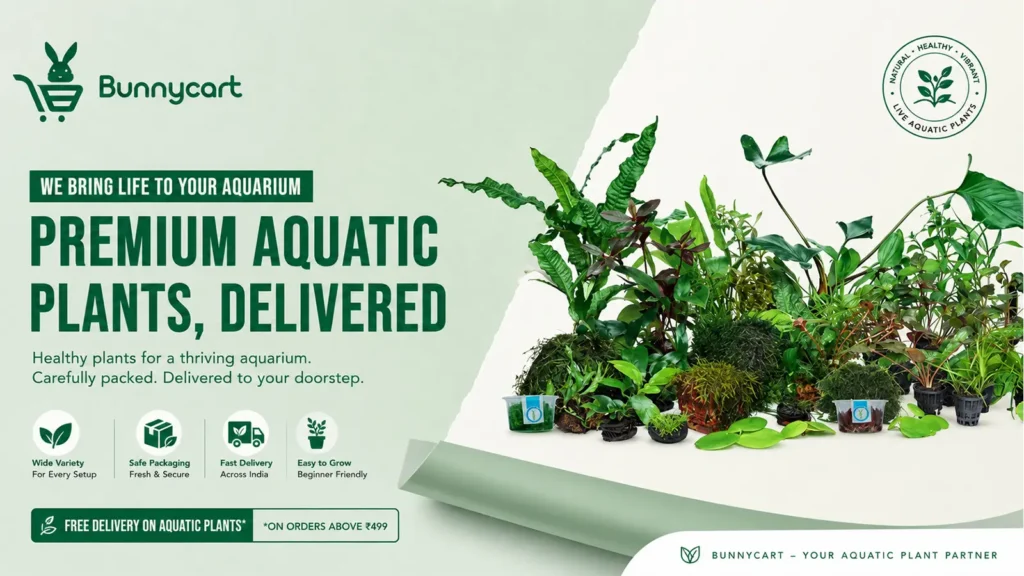
The company, based in Kerala, has spent more than a decade cultivating live aquarium plants at scale, which lets it stock foreground, midground, background, epiphyte and floating varieties alongside tissue culture aquatic plants grown in sterile lab conditions for a cleaner, pest free start in a new tank. Bunnycart backs every plant order with a live arrival guarantee and ships free on plant orders above 499 rupees, addressing one of the biggest hesitations first time buyers have about ordering living stock through the mail.

Beyond plants, the catalog covers aquarium fish across categories like guppies, bettas, tetras, mollies and shrimp, plus fish food, aquarium substrate and pumps and filters for basic tank maintenance. Bunnycart also runs a wholesale aquatic plants program aimed at aquarium retailers and aquascaping studios that need consistent stock in bulk rather than single retail orders, a service that leans on the same farm direct supply chain used for individual hobbyist orders.

The company delivers to customers across states including Kerala, Karnataka, Tamil Nadu, Maharashtra, Delhi and Gujarat, and its packing process is built specifically around keeping live plants and fish healthy through transit rather than treating shipping as an afterthought. For anyone setting up a new planted tank in India, Bunnycart functions as both a plant source and an ongoing supplier as that tank grows.

Frequently Asked Questions

Why do some aquarium plants ship as tissue culture instead of regular potted plants?

Tissue culture plants are grown in a sterile lab environment from plant cell cultures rather than soil, which means they arrive free of snails, algae and pest eggs that can hitchhike on regular pond grown plants. This makes them a common choice for hobbyists who want to avoid introducing unwanted pests into an established tank.

How long can live aquatic plants survive in transit before they start to suffer?

Most live aquatic plants can safely survive one to three days in transit if packed correctly with adequate moisture and no exposure to extreme temperatures, though some hardier species tolerate longer shipping windows. Plants that arrive dry, crushed or left in packaging too long are far more likely to show stress or melting once placed in the tank.

What is the difference between epiphyte and rooted aquarium plants?

Epiphyte plants like anubias and java fern attach to driftwood or rocks using their roots rather than growing in substrate, while rooted plants need to be planted directly into gravel or soil to anchor and absorb nutrients. Epiphytes are often chosen by beginners since they are harder to uproot and generally more forgiving of substrate type.

Do aquarium plants need a special substrate to grow well?

Many aquarium plants can survive in plain gravel, but nutrient rich substrates specifically formulated for planted tanks tend to produce noticeably better root development and growth, especially for heavier feeding species. Hobbyists running a low tech, low light setup often get by with basic substrate, while those aiming for a dense planted aquascape usually invest in a dedicated plant substrate.

Can live aquarium plants introduce pests or diseases into an existing fish tank?

Yes, plants sourced from ponds or outdoor farms can carry snail eggs, algae spores or parasites that survive the trip into a home aquarium if not properly quarantined or treated first. Dipping new plants in a diluted hydrogen peroxide or bleach solution before introducing them to an established tank is a common precaution among experienced aquarists.